












 Time:2026-04-03
  View:540次
As AI technology is widely applied across various industries, AI computing power is growing exponentially, placing extremely demanding requirements on hardware heat dissipation. Traditional cooling solutions have shown signs of strain when dealing with the high heat flux density of high-power chips and heterogeneous computing clusters. Particularly in areas involving precision structures such as ultra-thin fins and microchannels, manufacturing process limitations have become a key bottleneck in improving heat dissipation performance.
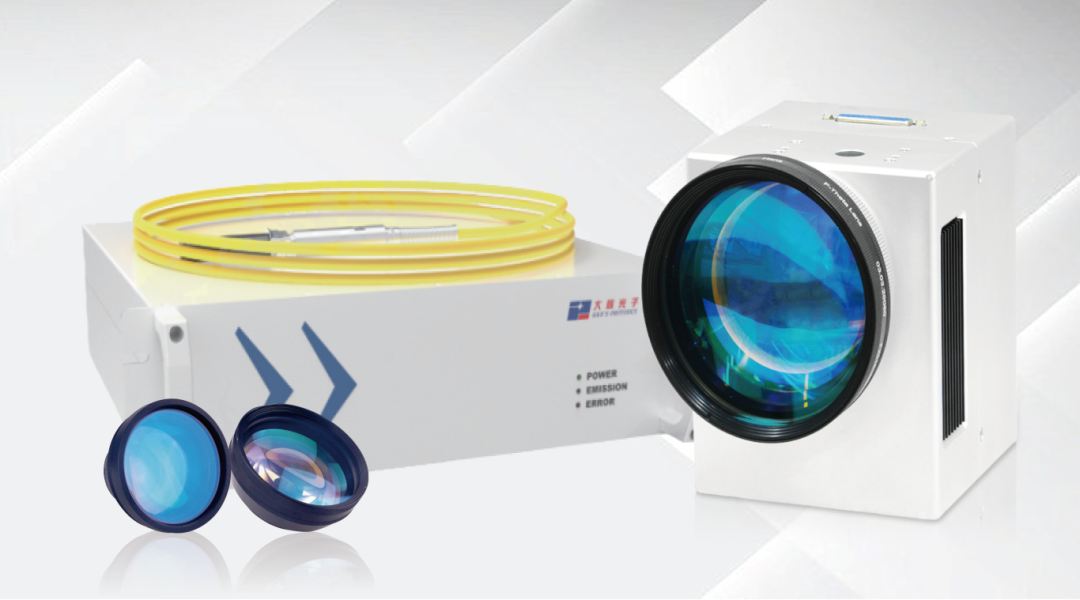
Based on decades of accumulated laser technology expertise from Han's Laser, the R&D team of Han's Additive Manufacturing Technology has successfully applied a green laser with a wavelength of 532 nm to Selective Laser Melting (SLM) technology. This innovation effectively overcomes the energy reflection challenges that traditional infrared lasers face when processing high-reflectivity copper materials, providing a crucial process pathway for manufacturing pure copper components with high density and high thermal conductivity.
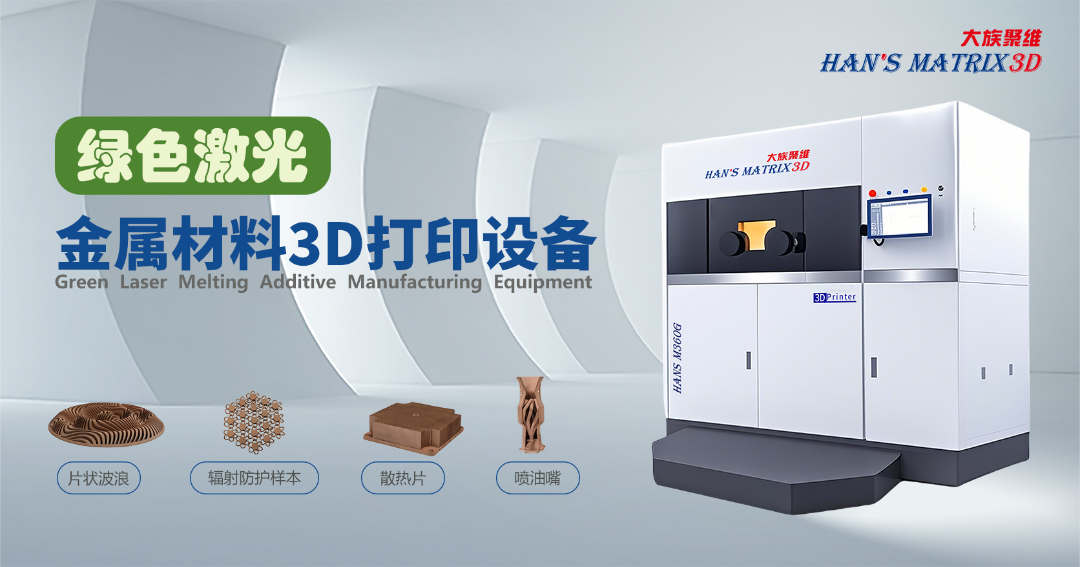
Building on this foundation, the newly launched HANS M360G green laser metal 3D printing device features a fine green laser spot design with a diameter of approximately 20 μm. By leveraging extremely high power density and precise manipulation capabilities, it enables the manufacturing of pure copper components with high density, high precision, and high performance.
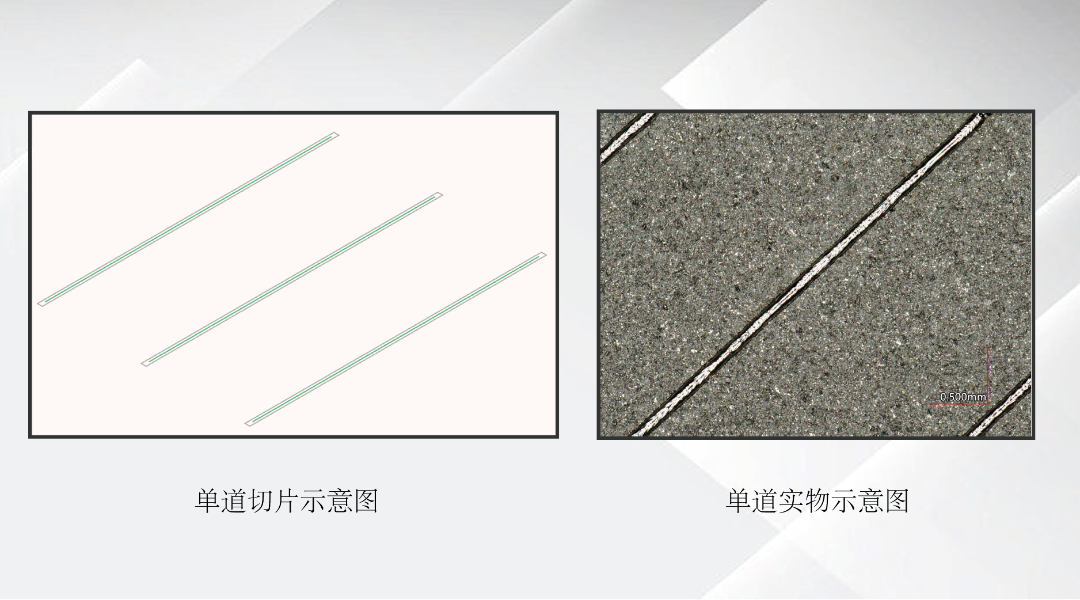
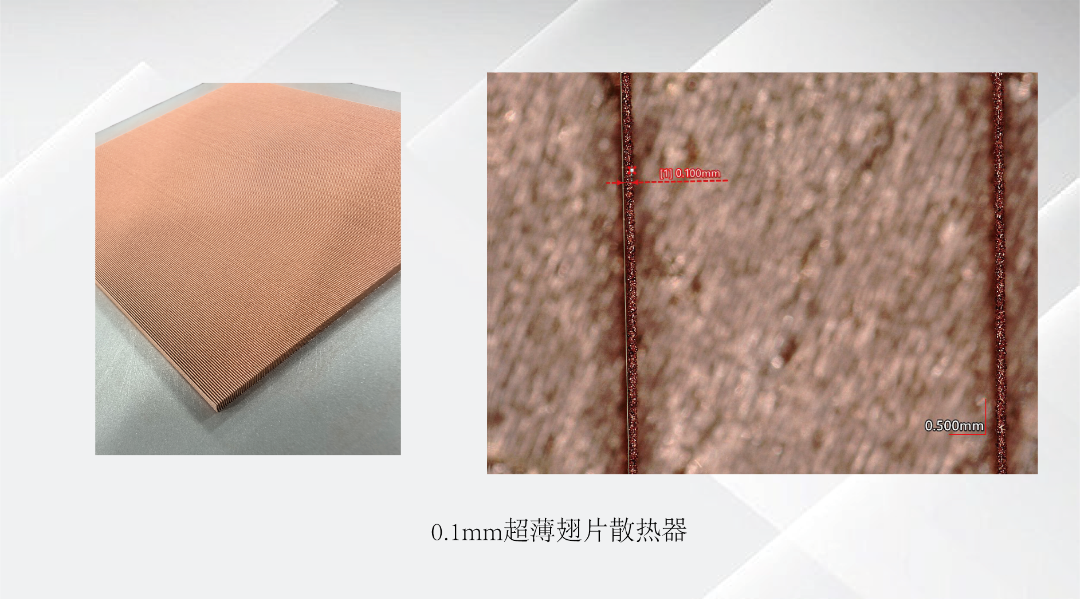
Building on the innovation of the equipment, the process development team started with customized powder, selecting small-particle-size pure copper powder as the raw material. They systematically conducted matrix testing and optimization of key parameters such as laser power, scanning speed, and hatch spacing, ultimately establishing a single-track scanning strategy. This process successfully confined the melt pool width to an extremely small range, thereby achieving high-quality formation of ultra-thin wall structures as thin as 0.1 mm.
Test data confirms that the heat exchange efficiency of heat sinks with an ultra-thin wall thickness of 0.1 mm is improved by over 40% compared to conventional solutions. Leveraging integrated molding technology, this equipment not only allows for more fins to be arranged within a limited space to increase the heat dissipation area, but also eliminates contact thermal resistance at the source. As a result, it achieves efficient heat conduction along a continuous material path, making it particularly suitable for addressing the instantaneous high heat flux density challenges posed by GPU clusters in AI training servers.
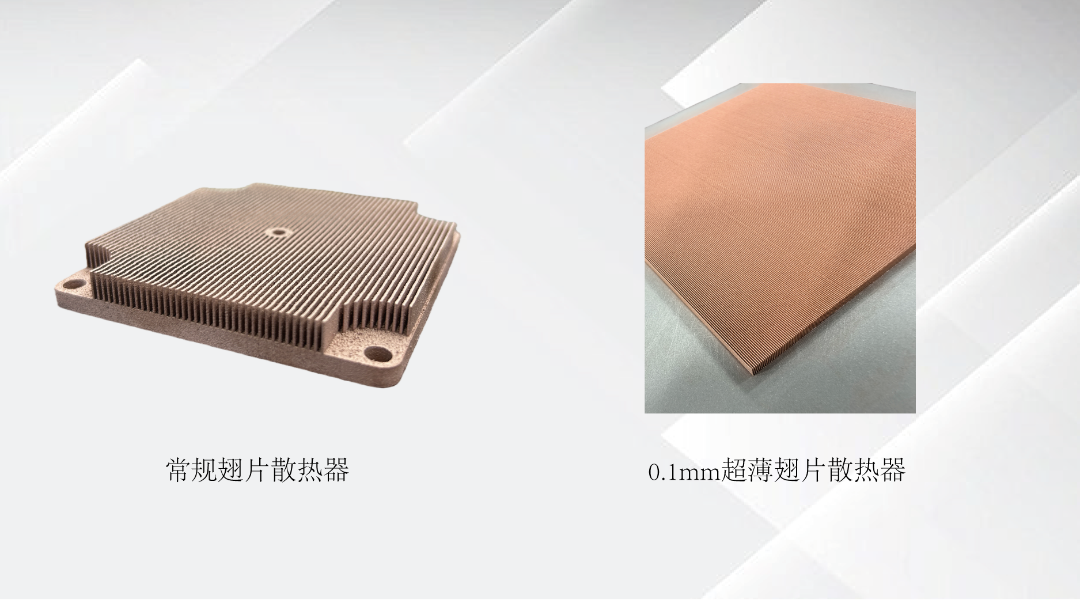
Furthermore, the significant breakthrough in heat sink performance enabled by metal 3D printing technology is also attributed to its ability to produce complex structures that are "born for heat dissipation."
For example, in cooling solutions for high-end AI computing acceleration cards, the HANS M360G can manufacture conformal, chip-fitting irregular structures. By increasing the heat exchange area, optimizing flow channel design, and enhancing fluid mixing, it achieves efficient heat dissipation, reduces pumping power loss, and effectively avoids localized overheating.
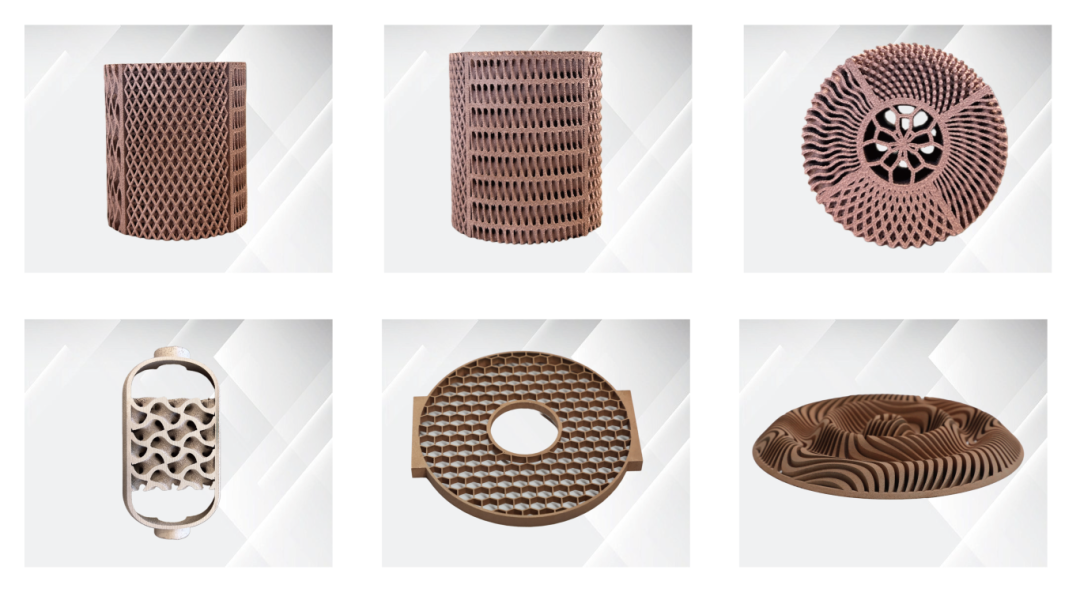
Such highly customized complex internal configurations are difficult to achieve with traditional manufacturing processes. With the help of metal 3D printing technology, not only is integrated molding accomplished, but outstanding performance is also demonstrated in key indicators such as flow resistance control and thermal stress distribution.
Thanks to its unique capabilities in pure copper material processing and micro-structure forming, the HANS M360G green laser metal 3D printing device is continuously expanding the boundaries of heat sink design possibilities. From ultra-thin fins to complex flow channels, this technology provides solid support for thermal management solutions of next-generation AI infrastructure.
As AI hardware continues to evolve toward higher integration and higher power density, thermal dissipation technology has risen from a supporting role to a key factor determining the upper limit of computing power. The design freedom brought by metal 3D printing is driving the thermal management philosophy from "manufacturing-feasible" toward "performance-optimal," becoming a core driving force for achieving higher AI computing power.